Ferma (2025)
Close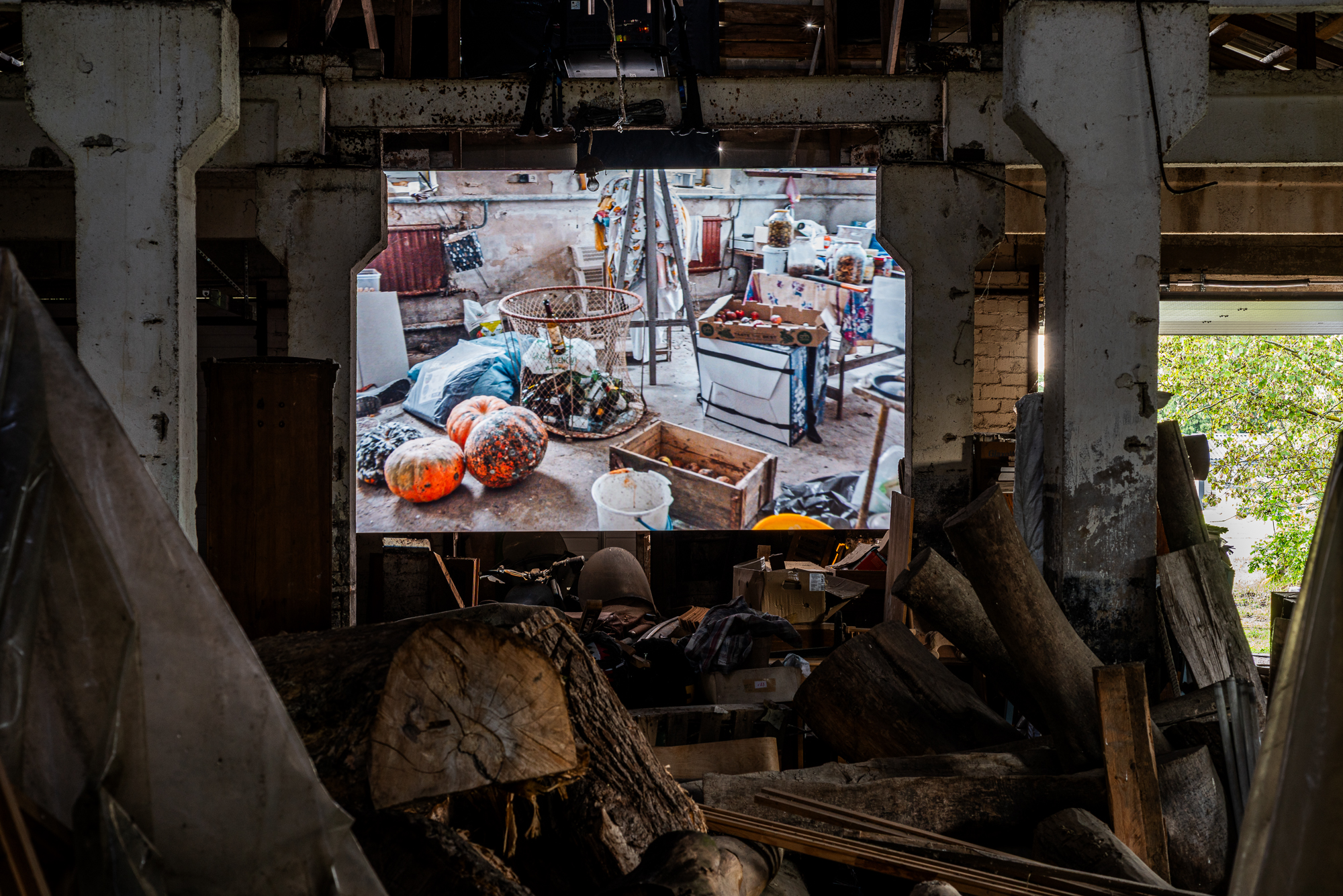
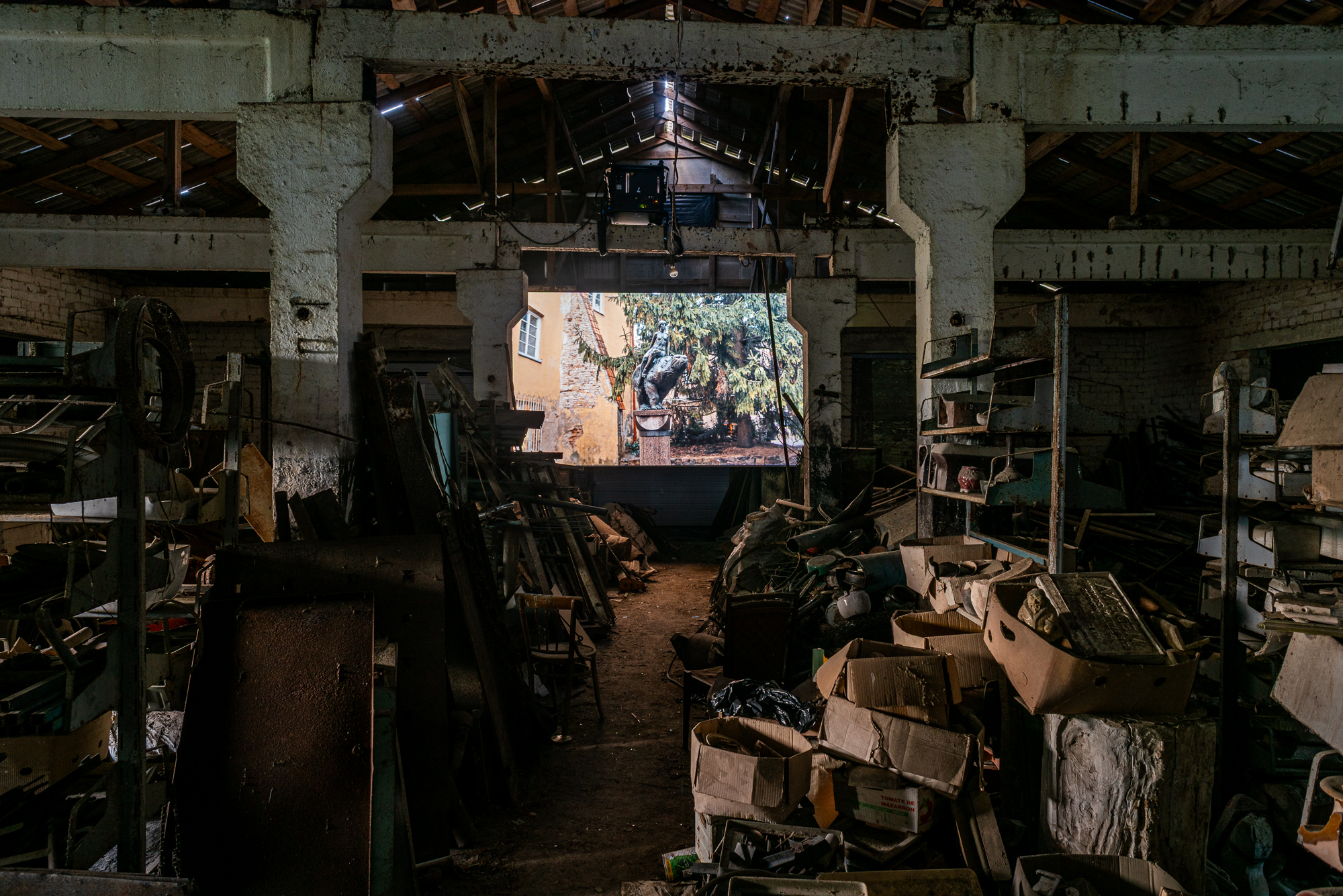
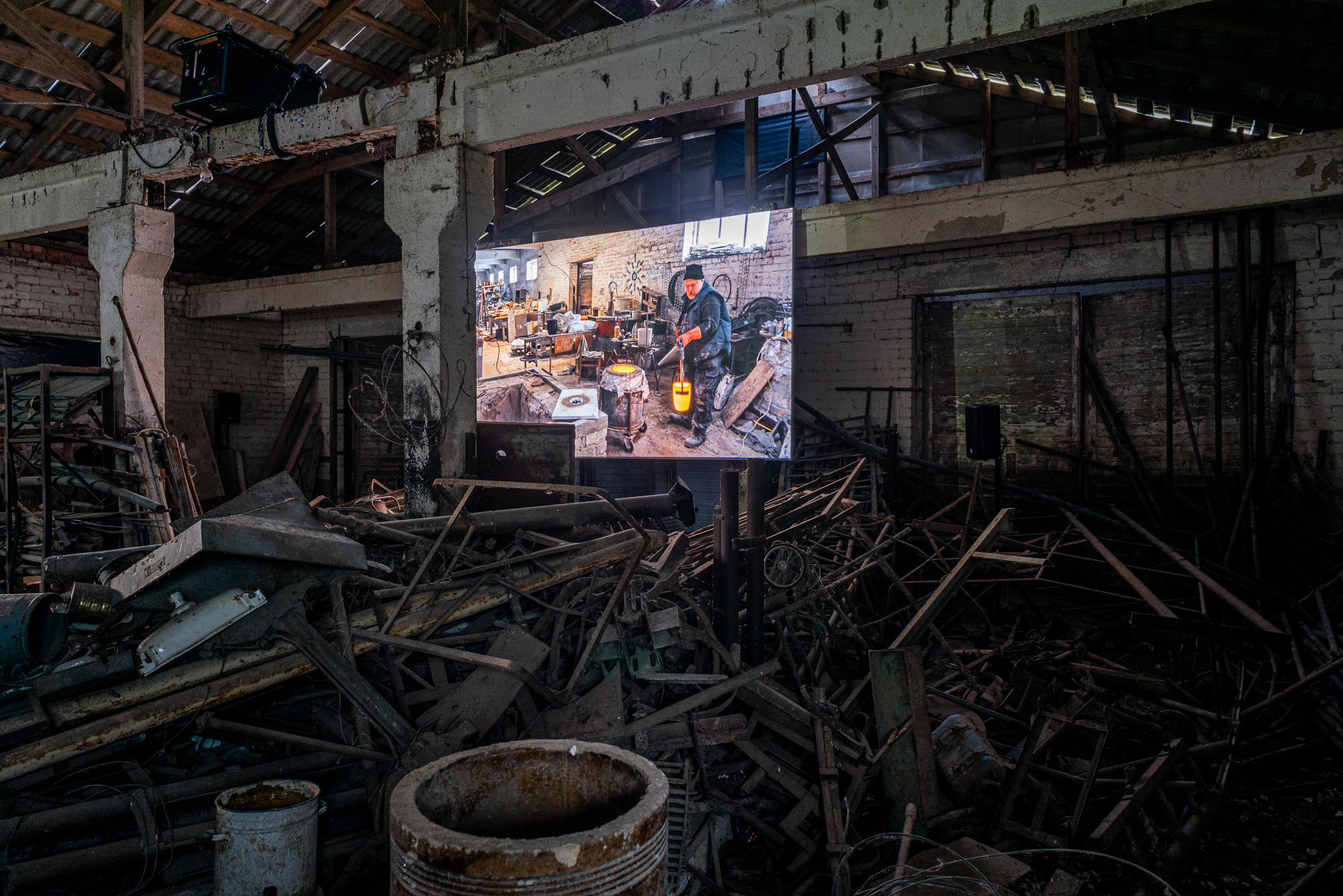
Curated by Francesco Urbano Ragazzi, Ferma features a two-channel video installation and a series of site-specific drawings created especially for the occasion.
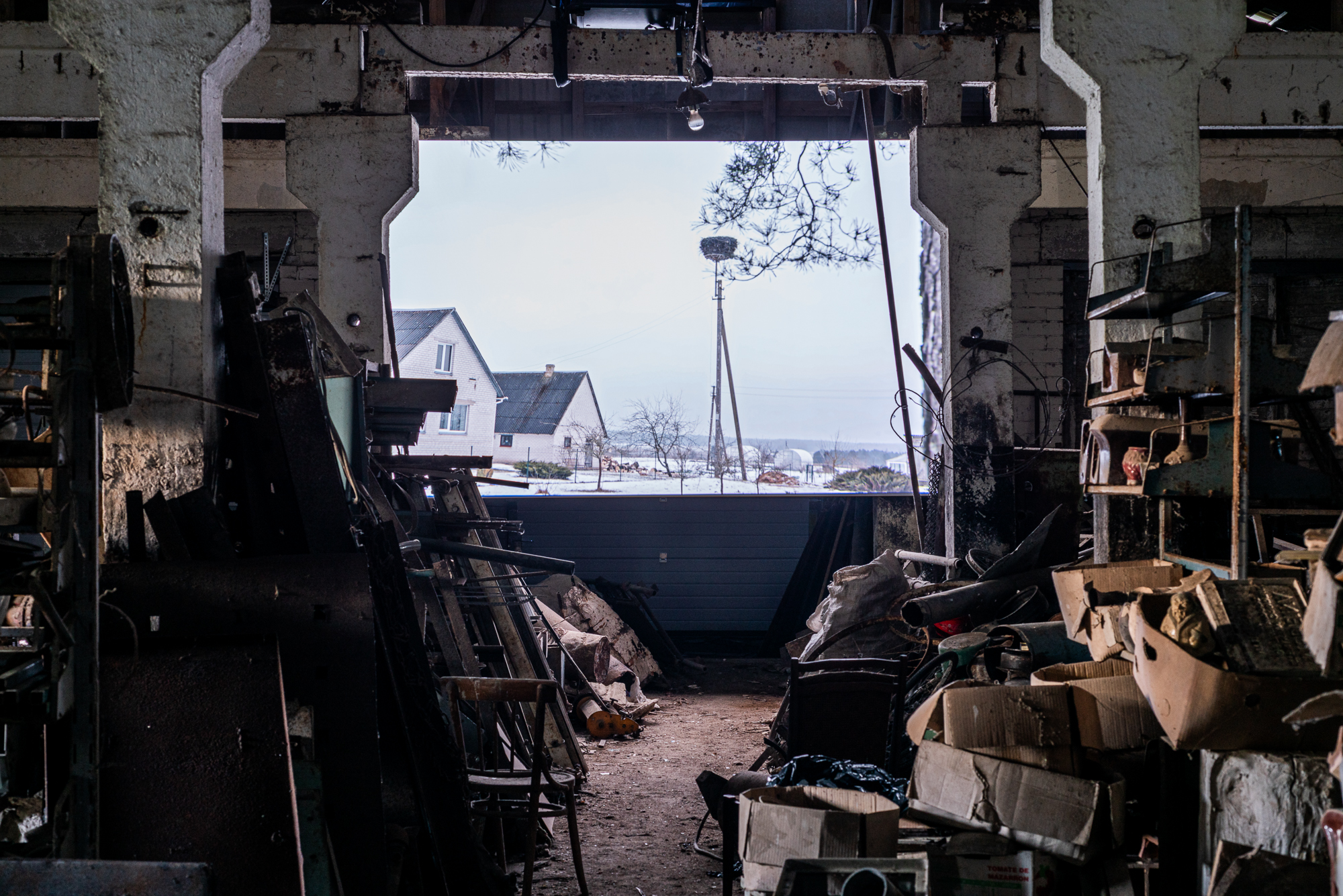
The project unfolds in a place that is foundational to the artist’s childhood: a former industrial building in the eldership of Sariai, which is the home and studio of her father, Marius Grušas, an artist himself.
Embracing the Fluxus spirit rooted in the Lithuanian art scene, the exhibition will be open to visitors for one day only, through a collective journey into the landscape of eastern border of Lithuania. Conceived as a ritual of initiation, Ferma confronts traumas that are both personal and historical, weaving together memory, landscape, and legacy.
“Only as the war of my generation draws closer and the sound of drones enters the nightmares can I finally understand what it means to come from the frontier, a place where social tectonic plates move first.
I move as a stork but frontier is printed in the blood.
It is not safe here. But we still grow. Animals, plants, people of the frontier.”
– Gabija Grušaitė
Curatorial text
This is the story of a fortress. A domain nestled in the Lithuanian countryside, whose inhabitants are, for the most part, objects.
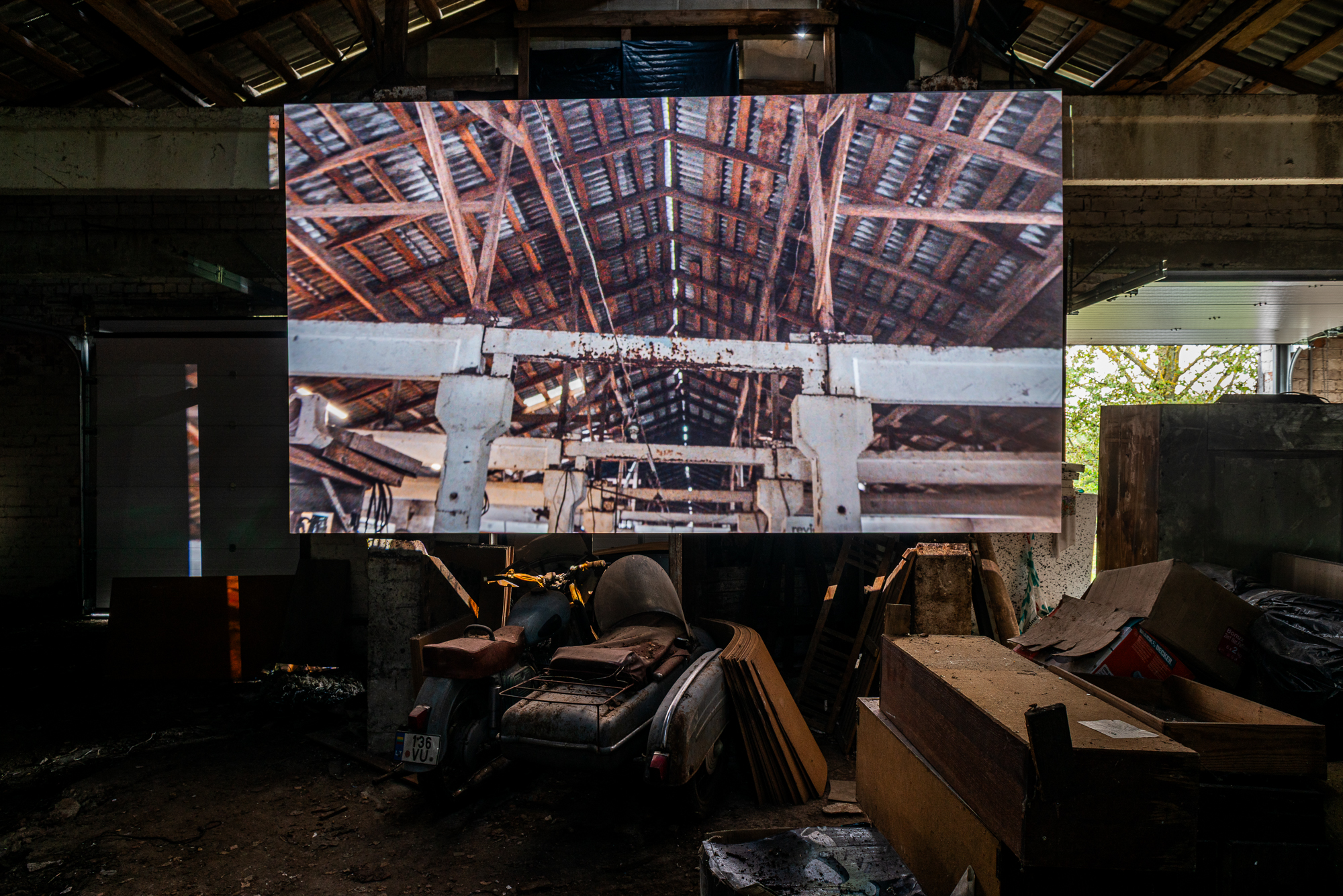
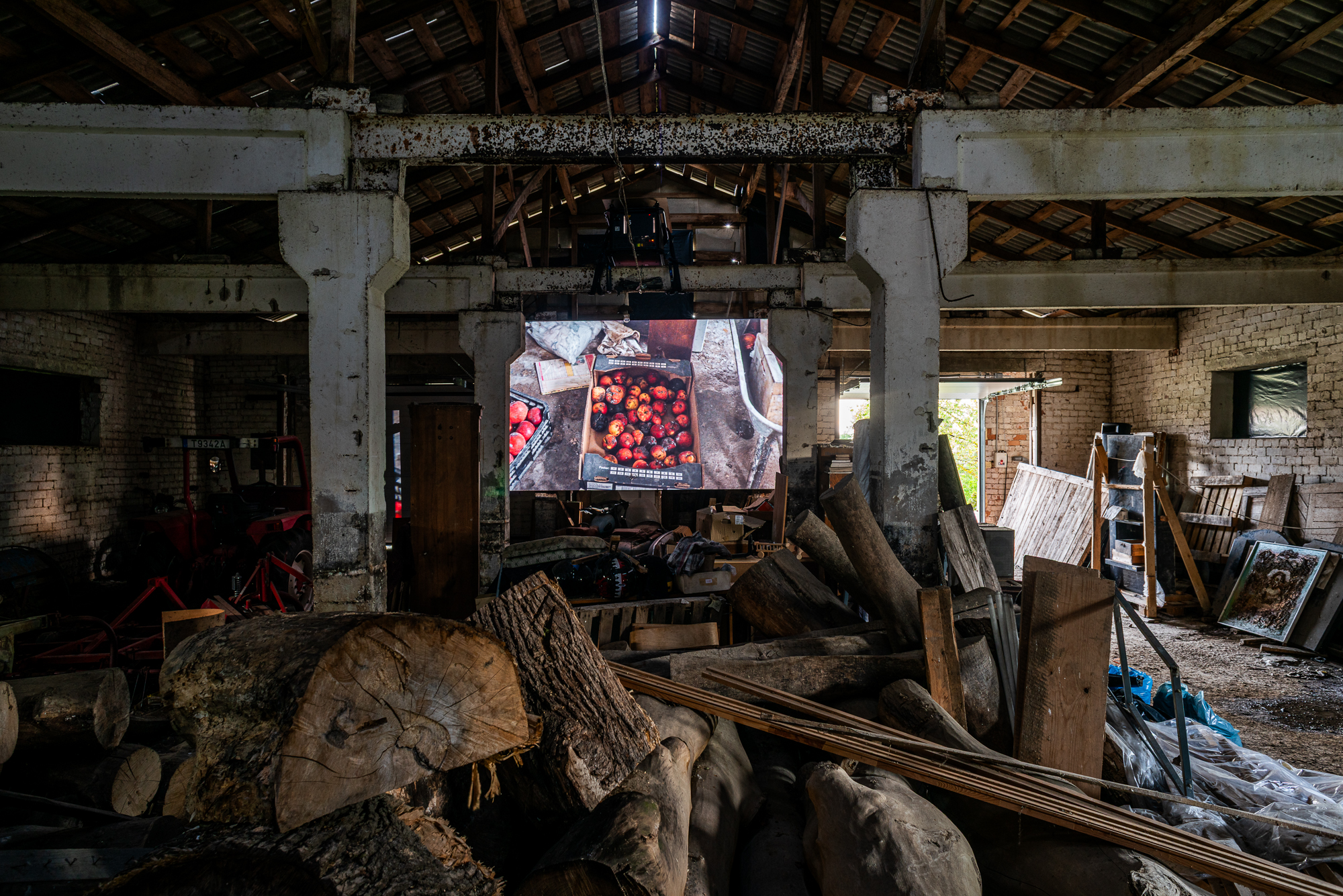
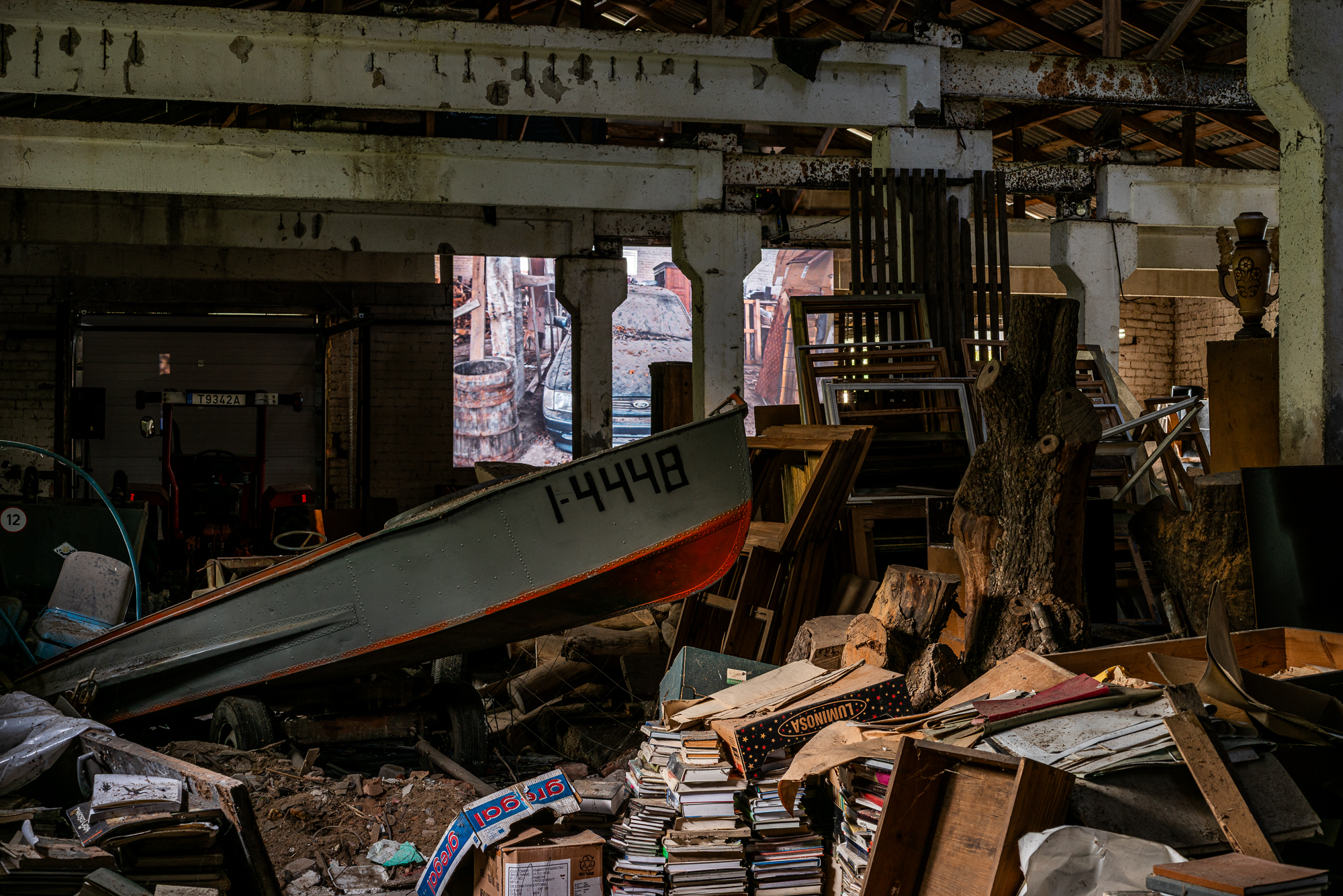
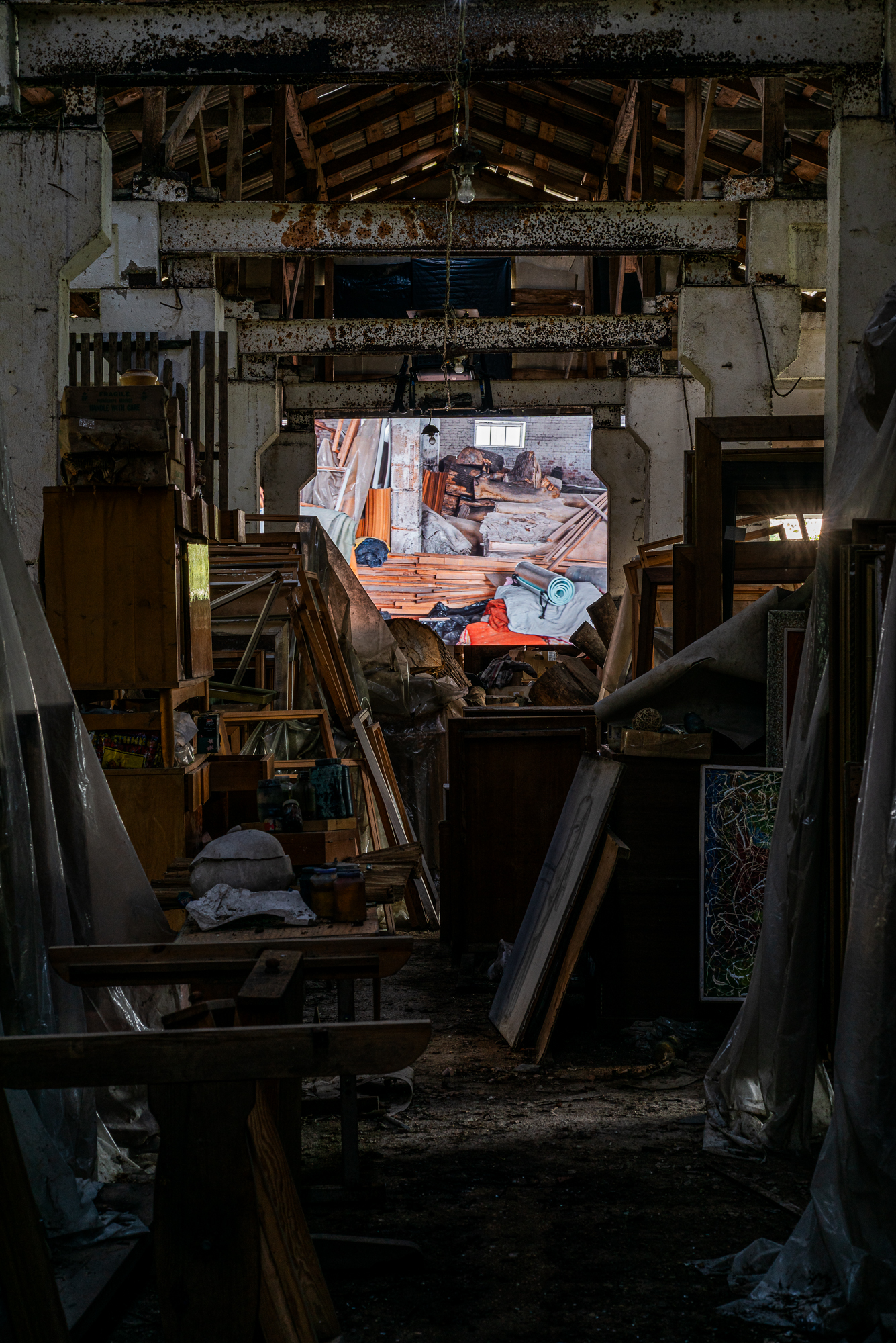
Wood, steel, iron, plaster, marble, glass, ceramic, stone, terracotta, pigments, fruit, and other materials combine within the space of a large industrial warehouse forming, day by day, a giant still life. A life-sized still life that, through an excess of either life or death, surpasses the human scale.
This is the realm of Marius Grušas, an artist known for his Medeinė: a sculpture depicting a woman who, with graceful composure, sits on the back of a bear. She is the Lithuanian goddess of forests and hunting. Making her way through the streets of Vilnius’ Old Town, she reminds the city that it was once a forest, and still is.
Everything is a forest. Even Marius Grušas’ fortress. And this fortress, like the forest, cannot be owned. No one possesses it, because everyone is possessed. The master of this fortress is a subject of an empire that no longer exists, or of the fear that an empire might return to take everything away. Meanwhile, the other members of the family try to escape the tyranny of things.
In this story, then, there is no king and no queen. There are no princes, nor any princess waiting to be saved. If there is a princess, she will save herself, with the strength and grace of a Medeinė.
The story of this fortress begins again today, on August 7, 2025. Gabija Grušaitė returns to the places that indelibly marked her childhood to retrace a personal map of survival, and to let it be inhabited by others, finally.
To the oppressive sense of a place where everything is accumulated and preserved, Grušaitė responds with horror pleni. Her gaze slips into the gaps of a constant all-over, tracing perspectives and escape routes that otherwise seem denied.
Words, the artist’s chosen medium, weave a new narrative fabric within the space, revealing not only their deepest origin but also the possibility of going beyond themselves. This time, however, the artist’s texts do not take the form of books, as her literary career might lead one to expect, but intertwine with videos and drawings that punctuate and expand the architectural dimension of the place.
Between the hangar’s aisles, cluttered with objects, the artist films a series of tracking shots while her voice-over retraces the physical and emotional density of the space and its story. The video is displayed in a mirrored setup at both ends of the same hangar, creating an effect of echo and continuation, at once expansive and claustrophobic.
Inside a separate room, the only empty space in the entire complex, the artist offers instead the spatial coordinates of the surrounding area through a floor drawing, serving as a personal orientation tool for visitors.
This passage unfolds as a ritual of initiation and liberation, traversing Marius’ studio, house, factory, and storage to reunite them into a single, monumental work of art that transcends itself. A work that stands somewhere between monument and decay, awareness and repression, symptom and genius. A work no longer belonging to the father, but not solely to the daughter either.
Because the story of this fortress is not intimate and personal. Not only. Alongside the traumas of a family, it holds those of an entire society: a post-industrial, post-rural, post-Soviet, and post-capitalist society that keeps finding itself at the borderlands of war.
This is an invitation to a reunion. PTSD REUNION.
Biographies
Gabija Grušaitė (b. 1987) is a writer and artist working between London, Tuscany and Vilnius. She is the author of the novels Neišsipildymas (2010), Stasys Šaltoka: Vieneri metai / Cold East (2017) and The Mycelium Dream (2025), and of installations that combine text, moving image and drawing.
Francesco Urbano Ragazzi is a curatorial duo founded in 2007 by Francesco Urbano and Francesco Ragazzi. Their practice moves across exhibition making, publishing and moving image, with a long-standing interest in the relationship between intimacy and public space.
Marius Grušas (b. 1960) is a Lithuanian sculptor whose works include Medeinė, the Lithuanian goddess of forests and hunting, installed in Vilnius’ Old Town. The Ferma installation takes place inside his home, studio and storage in the eldership of Sariai.